Flying with a baby or toddler is easier when the stroller is light enough to carry, quick to fold, and small enough for the way your airline handles cabin baggage. This guide brings our previous lightweight, airport, airplane, carry-on, toddler, and Disney advice into one page so you can compare the important trade-offs without jumping between near-duplicate articles.
Important: no stroller is guaranteed cabin acceptance on every flight. Airline limits, aircraft type, available bin space, and staff decisions can all affect whether a stroller must be gate-checked. Measure the stroller in its fully folded configuration and confirm the latest policy directly with your airline before departure.
Quick comparison
- Stokke YOYO³: best for frequent flyers who want a very compact, established travel system.
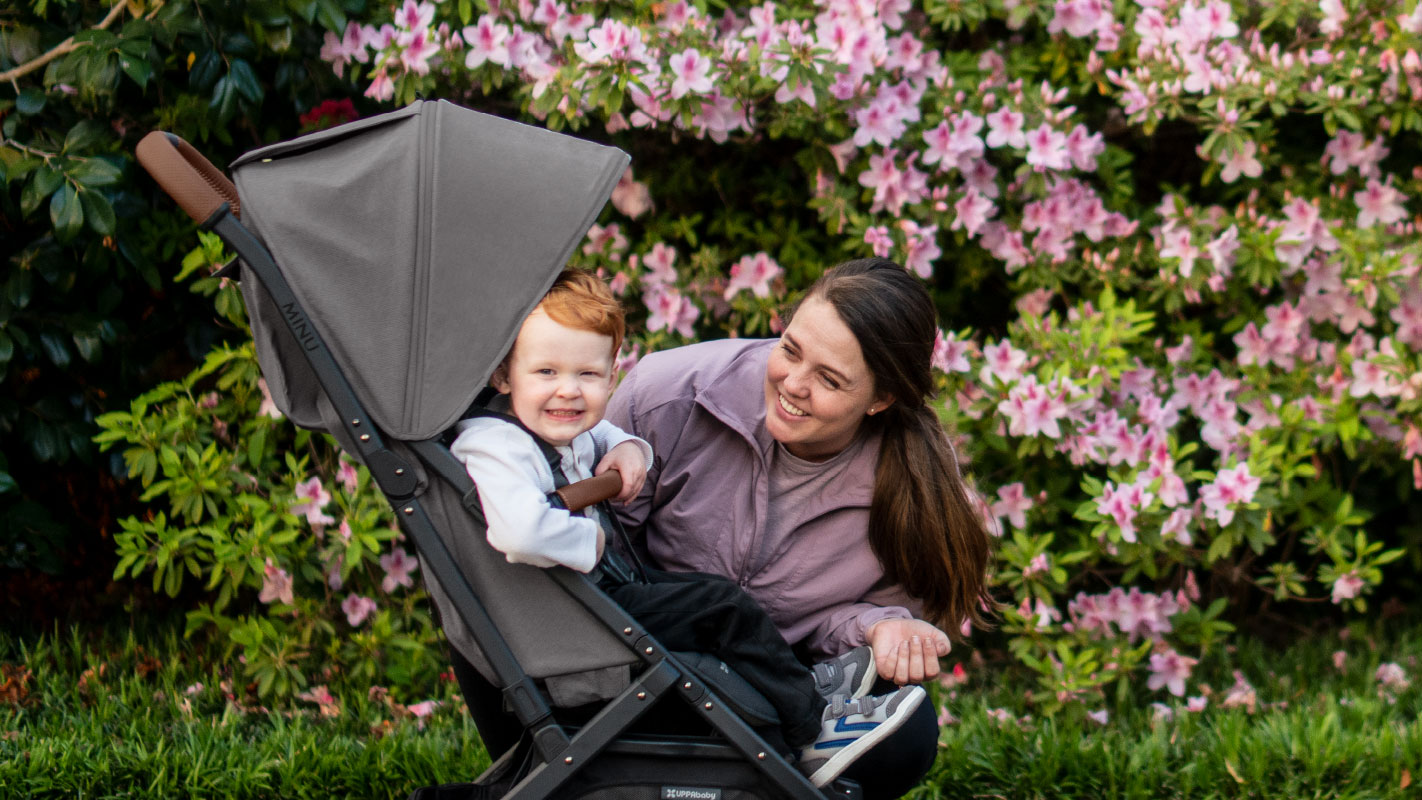
- UPPAbaby Minu V3: best for families prioritizing comfort, storage, and newborn flexibility while retaining a compact fold.
- gb Pockit+ All-City: best for minimum carrying weight and an exceptionally compact package on smooth surfaces.
- A basic umbrella stroller: best for occasional trips when budget matters more than overhead-bin storage.
How we evaluated these travel strollers
SIMBABY compared current manufacturer specifications, folded dimensions, weight, age and load limits, carry features, recline, storage, and airline-related guidance. We did not conduct a controlled hands-on laboratory test, so this article does not claim that every stroller was personally tested. Specifications can vary by market and configuration; verify them with the manufacturer before buying.
1. Stokke YOYO³ — best compact all-rounder for frequent flying
The YOYO³ replaces the older BABYZEN YOYO2 discussed in our original guide. Stokke lists a folded size of approximately 52 × 44 × 18 cm and describes it as suitable for air travel, while also warning that cabin-luggage standards vary by airline. Its shoulder-carry design, compact fold, four-wheel suspension, and broad accessory system make it the strongest all-round option for frequent travel.
- Best for: frequent flights, public transport, and small hotel rooms.
- Strengths: compact folded shape, shoulder carrying, mature accessory ecosystem, and newborn configurations.
- Trade-offs: premium price and accessories can increase total cost.
Check current YOYO³ travel specifications at Stokke.
2. UPPAbaby Minu V3 — best balance of comfort and portability
UPPAbaby lists the Minu V3 at 16.7 lb with folded dimensions of 10 × 18 × 21.5 inches. It has a one-hand fold, integrated carry strap, deep recline, and a basket rated to 20 lb. The brand calls it IATA-compatible, but it still recommends checking the individual airline. Compared with the smallest strollers, it is heavier, but it offers more everyday comfort and storage.
- Best for: long terminal walks, daily use after landing, and families wanting more storage.
- Strengths: one-hand fold, strong basket capacity, full-wheel suspension, and from-birth options.
- Trade-offs: heavier than ultra-compact competitors and may consume most of a carrier’s cabin allowance.
Check current Minu V3 specifications at UPPAbaby.
3. gb Pockit+ All-City — best when compact size comes first
gb lists the Pockit+ All-City at about 5.7–6 kg depending on the regional specification. Its two-step, self-standing fold produces a small package, and the manufacturer describes it as hand-luggage compliant. The lighter frame is attractive for stairs, trains, and security queues, but its small wheels and modest padding favor airports and smooth city surfaces over rough ground.
- Best for: travelers who prioritize low carrying weight and minimum folded volume.
- Strengths: very compact fold, self-standing storage, and easy carrying.
- Trade-offs: less cushioned than larger models and not the strongest option for broken sidewalks or gravel.
Check current Pockit+ All-City information at gb.
Should you carry the stroller onboard or gate-check it?
Carry it onboard when permitted
- You can use it immediately after landing.
- You reduce exposure to baggage handling.
- It can simplify a tight connection.
Gate-check it when cabin space is uncertain
- You avoid competing for overhead space.
- A larger, more comfortable stroller may serve the whole trip better.
- A padded travel bag can help protect exposed wheels and folding parts.
Even when a manufacturer calls a stroller “cabin approved” or “IATA compatible,” the operating airline controls acceptance. Save a screenshot of the airline’s current stroller and cabin-bag policy, but be prepared to gate-check if the crew requires it.
What to check before buying
Folded dimensions
Compare all three folded measurements with your usual airline’s allowance. Do not rely on the word “compact.” Wheels, bumper bars, cup holders, and adapters may alter the packed size.
Total carrying weight
Think about the real airport load: stroller, child, diaper bag, and cabin baggage. A shoulder strap or balanced carry handle can matter as much as a one- or two-pound difference.
One-hand fold
A simple fold is especially valuable at security and the boarding door. Practice at home until you can fold, lock, and carry the stroller without placing your child in an unsafe position.
Child age, recline, and restraint
Check the manufacturer’s minimum age, maximum load, recline guidance, and approved newborn accessories. Always use the restraint system and never assume a near-flat seat is newborn-safe without explicit manufacturer approval.
Wheels and suspension
Tiny wheels help create a smaller fold but are less forgiving on cobblestones, curbs, and rough sidewalks. If the stroller will be your main transport after landing, comfort and wheel design deserve more weight in the decision.
Airport checklist
- Check the airline’s stroller and cabin-baggage rules for your exact fare and route.
- Measure the stroller after removing or folding every accessory.
- Label the stroller and photograph its condition before gate-checking.
- Pack a protective bag if it may enter the baggage hold.
- Keep medicines, documents, and essential baby supplies outside the stroller.
- Ask at check-in where a gate-checked stroller will be returned.
Choosing a travel stroller for a toddler
For a toddler, the smallest fold is only part of the decision. Compare the seat height, footrest, canopy clearance and the manufacturer’s child weight and height limits. If possible, try the exact model with your child: a stroller can be within its stated load limit and still feel cramped.
For long sightseeing days, give recline, usable storage and the surfaces on your route as much attention as carrying weight. A compact model suits frequent stairs and short transfers; a slightly larger stroller may be a better compromise when you will walk for much of the day. Use the harness as instructed and follow the manual’s limits for the child and basket separately.
Taking a travel stroller to Disney
At Walt Disney World, strollers must be no larger than 31 inches (79 cm) wide and 52 inches (132 cm) long; stroller wagons are prohibited. Check the official Walt Disney World rules before your visit. These are Florida’s rules: check the relevant resort separately for trips elsewhere.
Measure the stroller open, not folded. For a full park day, prioritize a comfortable seat, useful canopy, accessible basket and a fold you can manage for transport. Do not assume that meeting an airline’s baggage allowance proves park eligibility, or vice versa. A distinctive luggage tag can make the stroller easier to identify in parking areas; keep valuables with you when leaving it.
Travelling on a budget
You do not need a premium compact stroller for every trip. If gate-checking is acceptable and travel is occasional, start with our separate travel stroller guide under $200. Compare the exact model, current price and return policy before buying; an inexpensive umbrella fold is not automatically suitable for an overhead bin.
Frequently asked questions
Is any stroller guaranteed to fit in an overhead bin?
No. A stroller can meet commonly cited dimensions and still be gate-checked because of the airline’s rules, fare restrictions, aircraft type, or limited bin space.
What is a good weight for a travel stroller?
Many travel-focused models weigh roughly 12–17 lb. The best choice is the lightest model that still provides the comfort, age suitability, durability, and storage your trip requires.
Can a lightweight stroller be used every day?
Yes, if its seat, wheels, storage, and durability match your routine. An ultra-compact airport stroller may feel less comfortable on rough surfaces than a slightly heavier everyday model.
Which model is best for an international trip?
Choose according to the whole itinerary. The YOYO³ emphasizes compact travel, the Minu V3 adds comfort and storage, and the Pockit+ All-City minimizes size and carrying weight. Airline acceptance must be checked separately for every carrier.
Bottom line
For frequent air travel, the Stokke YOYO³ is the strongest compact all-rounder. Choose the UPPAbaby Minu V3 when comfort, storage, and everyday usefulness matter more than minimum weight. Choose the gb Pockit+ All-City when the smallest practical package is the priority. Whichever you select, verify current specifications and airline rules before every trip.
Editorial note: This guide was consolidated and fact-checked against manufacturer information on September 3, 2026. SIMBABY may update selections as products and travel policies change.